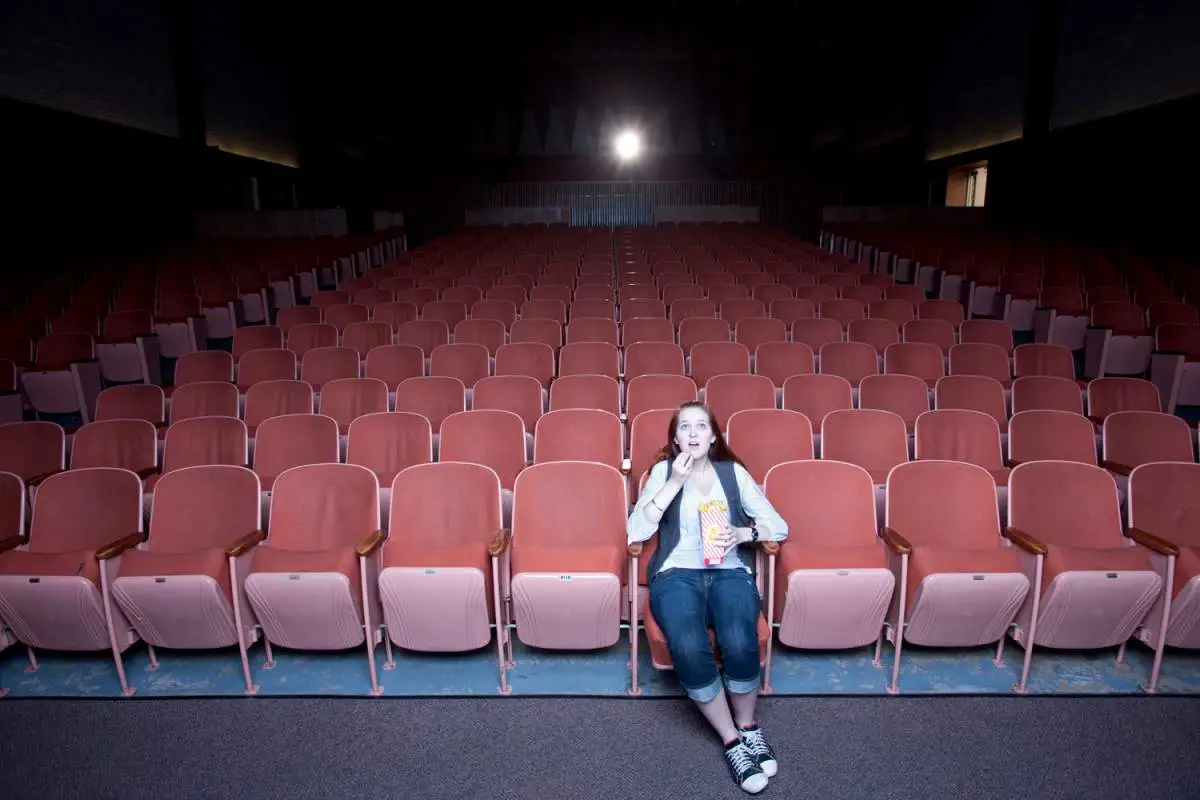
It’s a strange kind of ritual—turning off the lights, silencing your phone, and letting a story take over your living room. In an era when algorithms tell us what to watch and group chats buzz with live reactions, the simple act of watching a movie alone feels oddly rebellious. Yet for many, it’s when cinema feels most alive.
The Solitude of the Screen
Movie theaters used to be temples of shared emotion—hundreds of strangers gasping, laughing, or crying together. But as streaming took over, screens moved into our bedrooms. Watching became private, even secretive.
That shift changed how we relate to film. When you’re alone, there’s no pressure to perform your reactions. You can pause mid-scene, rewind, or just sit silently in the credits. That silence becomes part of the film itself.
Think of watching Lost in Translation or Her by yourself late at night. Their quiet loneliness feels different when you’re the only audience member—it’s no longer a story about solitude, it is solitude.
Why Some Films Work Better Alone
Certain movies demand solitude to breathe. A loud crowd can drown out subtleties—the flicker of hesitation in an actor’s eyes, the spaces between dialogue, the gentle melancholy of a final frame.
Films like Nomadland (2020) or Drive My Car (2021) unfold slowly, almost shyly. Watching them with others can feel like a mismatch of rhythms; the films ask for contemplation, not commentary. Alone, you can let silence settle. You can live inside the frame for a while before returning to reality.
There’s also a psychological reason. Solitary viewing reduces “social noise”—our tendency to mirror the emotions of others. Without that influence, we connect to the story more authentically, on our own wavelength.
The Rebirth of Personal Cinema
Ironically, the digital age has revived a very old idea: the personal relationship between viewer and film.
In the 1950s, cinephiles in Paris would sit alone in smoky theaters, scribbling notes in the dark, trying to decode what Godard or Fellini was saying. Today, we might stream The Zone of Interest or Past Lives at home with similar devotion—pausing to think, rewinding a scene to catch a line we missed.
It’s not antisocial; it’s intimate. These moments are where film becomes less about consumption and more about reflection.
And when we finally discuss those movies with others—online or over coffee—it’s not a reaction we’re sharing, but a piece of thought shaped in solitude.
How Solitude Sharpens Emotion
Ever notice how a sad movie feels heavier when you’re alone? That’s because solitude amplifies emotional processing. Without distraction, the brain spends more energy interpreting facial expressions, tone, and music.
Watching Manchester by the Sea or Aftersun in silence can feel almost unbearable, yet cathartic. There’s no laughter nearby to soften the blow, no chatter to escape into. You sit through the discomfort, and in doing so, it becomes meaningful.
In a group, emotion is diffused; alone, it’s distilled.
The Hidden Social Side of Watching Alone
Here’s the paradox: solitary movie-watching often makes people more connected.
You might watch Everything Everywhere All at Once by yourself and feel an overwhelming urge to call your mom after. You might stream an old Miyazaki film and suddenly remember childhood afternoons on the couch.
Great films rewire how we see the world beyond the screen. Solitude just makes the connection sharper. You step out of a movie not isolated, but re-attuned—to people, to places, to yourself.
A Ritual Worth Keeping
In a media landscape obsessed with live reactions and instant takes, solitude feels like luxury.
Maybe that’s why many are rediscovering it—not as withdrawal, but as presence.
Try this sometime: no texting, no second screen, no half-watching while cooking dinner. Pick a film you’ve been putting off—something quiet, something human. Watch it alone, all the way through.
When the credits roll, don’t rush to fill the silence. Sit there. Feel the echo.
That’s the moment when movies still work their oldest magic: turning isolation into connection, darkness into empathy, and a couple of hours into something much larger than time.