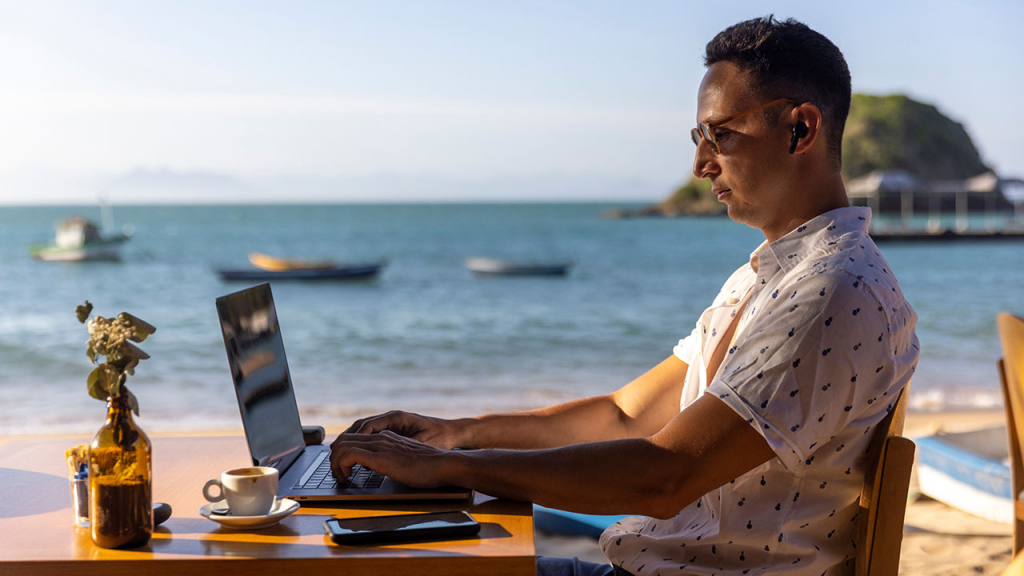
At first, it sounds like the perfect dream — answering emails from a beach café, hopping between time zones like they’re train stops, collecting stories instead of souvenirs.
But the more people I meet living this “free” lifestyle, the more I realize it’s not freedom they’re chasing — it’s balance they’re losing.
The Myth of Freedom
We tend to romanticize the digital nomad. A laptop, Wi-Fi, and a tan — what could go wrong?
But most digital nomads I’ve spoken to confess that after a few months, the thrill dulls. Airports blur together, new apartments feel temporary, and every sunset starts to look the same when your workday never really ends.
Freedom, they admit, often morphs into a subtle kind of fatigue — the kind that comes from having too many choices and no real home base.
There’s an irony here: people become digital nomads to escape monotony, yet their days often fall into another loop — find Wi-Fi, finish tasks, move again. The scenery changes, but the stress doesn’t.
Loneliness in Motion
There’s also the quiet loneliness nobody posts about.
Conversations with locals are brief, friendships transient. You become good at goodbyes — efficient, polite, practiced. The next co-working space always has new faces, but rarely familiar ones.
I remember talking with a freelance designer in Lisbon. She told me that after two years of traveling, she stopped taking photos. “What’s the point?” she said. “I have nobody to send them to.”
That line stuck with me.
In constant motion, relationships become optional — and that’s the problem. Human connection requires roots, or at least repetition. Without that, even paradise starts to feel hollow.
The Work Trap
What’s rarely discussed is how work changes when your office has no walls.
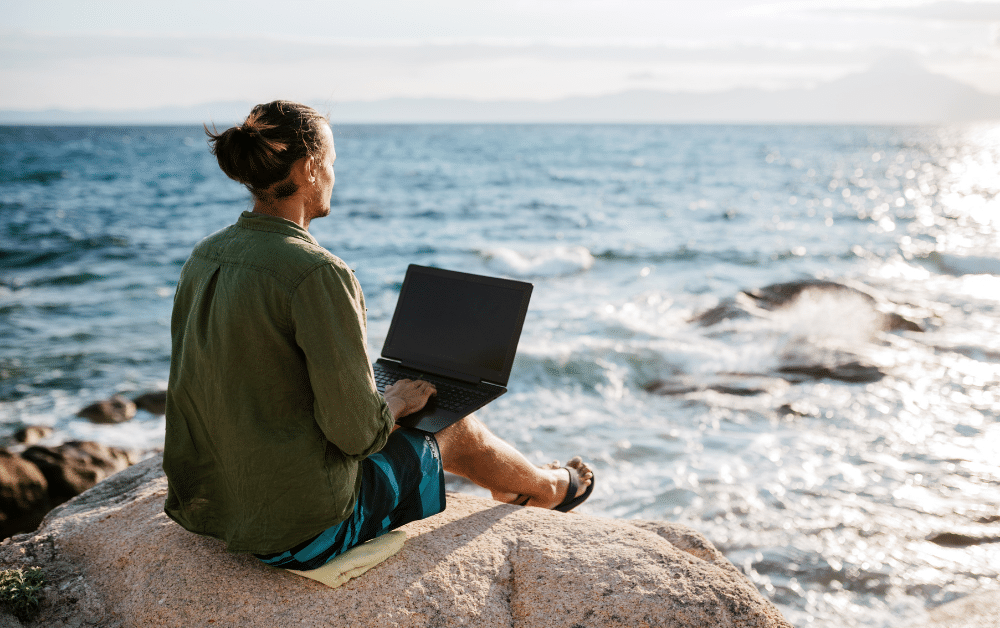
When you can technically work anywhere, you end up working everywhere. Beaches become email hubs; airports, editing suites. The line between “life” and “living” fades.
Many nomads quietly struggle with guilt — guilt for not doing enough, for not enjoying enough, for not living up to the fantasy. The constant exposure to curated “travel productivity” on social media only fuels that anxiety.
There’s no HR department in Bali to remind you to take a day off.
There’s just you, your laptop, and the feeling that maybe, just maybe, you’re missing something that can’t be captured on an Instagram story.
Finding a Rhythm, Not a Routine
The healthiest nomads I’ve met — the ones who seem genuinely content — share one thing: rhythm.
They treat travel not as escape, but as practice. They pick a few cities they return to, build micro-communities, and respect downtime.
One developer I met in Taipei works three months on, one month off. During his “off” month, he leaves the laptop closed — hikes, cooks, learns the local language.
He told me, “If you don’t stop, you forget why you started.”
That might be the quiet wisdom hidden in the nomad lifestyle: movement is only meaningful if you allow yourself stillness.
The New Definition of Home
Maybe “home” isn’t a single place anymore. Maybe it’s a playlist that follows you from Seoul to Madrid. Or a few friends you always call, regardless of the time zone.
For some, home becomes a ritual — the morning coffee, the evening walk, the voice message you send before bed.
There’s no shame in staying restless. But if you’re always searching for the next destination, it’s worth asking: what are you hoping to find that the last place didn’t give you?
Sometimes, the only journey left is inward — to figure out why movement feels safer than stillness.
A Quiet Realization
Being a digital nomad isn’t about geography. It’s about negotiation — between freedom and belonging, novelty and comfort, solitude and connection.
And like any negotiation, it requires honesty.
The lifestyle can absolutely work — if you see it for what it is: not an escape from structure, but a chance to design your own.
Maybe the best part of this modern nomadic life isn’t the passport stamps or the postcards.
Maybe it’s realizing that “home” was never a location. It was a feeling you learned to carry with you.